For international schools
An alumni network for international schools across borders
Help graduates find peers after a move, keep campus and class-year groups connected, and ask for career advice across time zones. Start with one verified alumni cohort and a clear owner for the network.
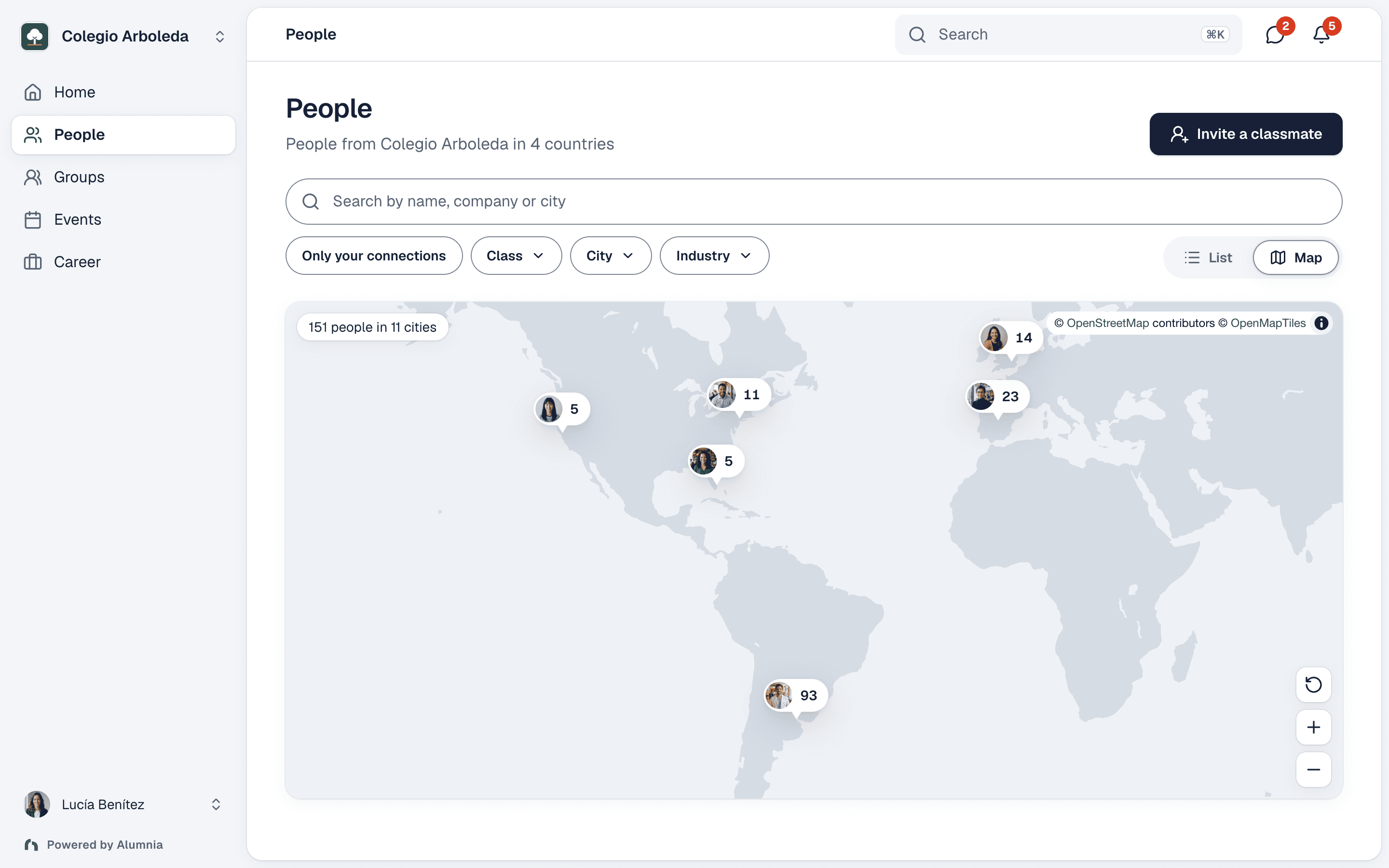
Find a familiar connection in a new city
Illustrative scenario, invented rather than a customer result: a graduate moves to Berlin and looks for peers from the same institution; another in Bogotá wants advice from an earlier cohort. The directory and city-level map help them explore profiles by location, class year and professional context. This is not live GPS tracking. Discovery depends on the location members provide and the information they choose to show.
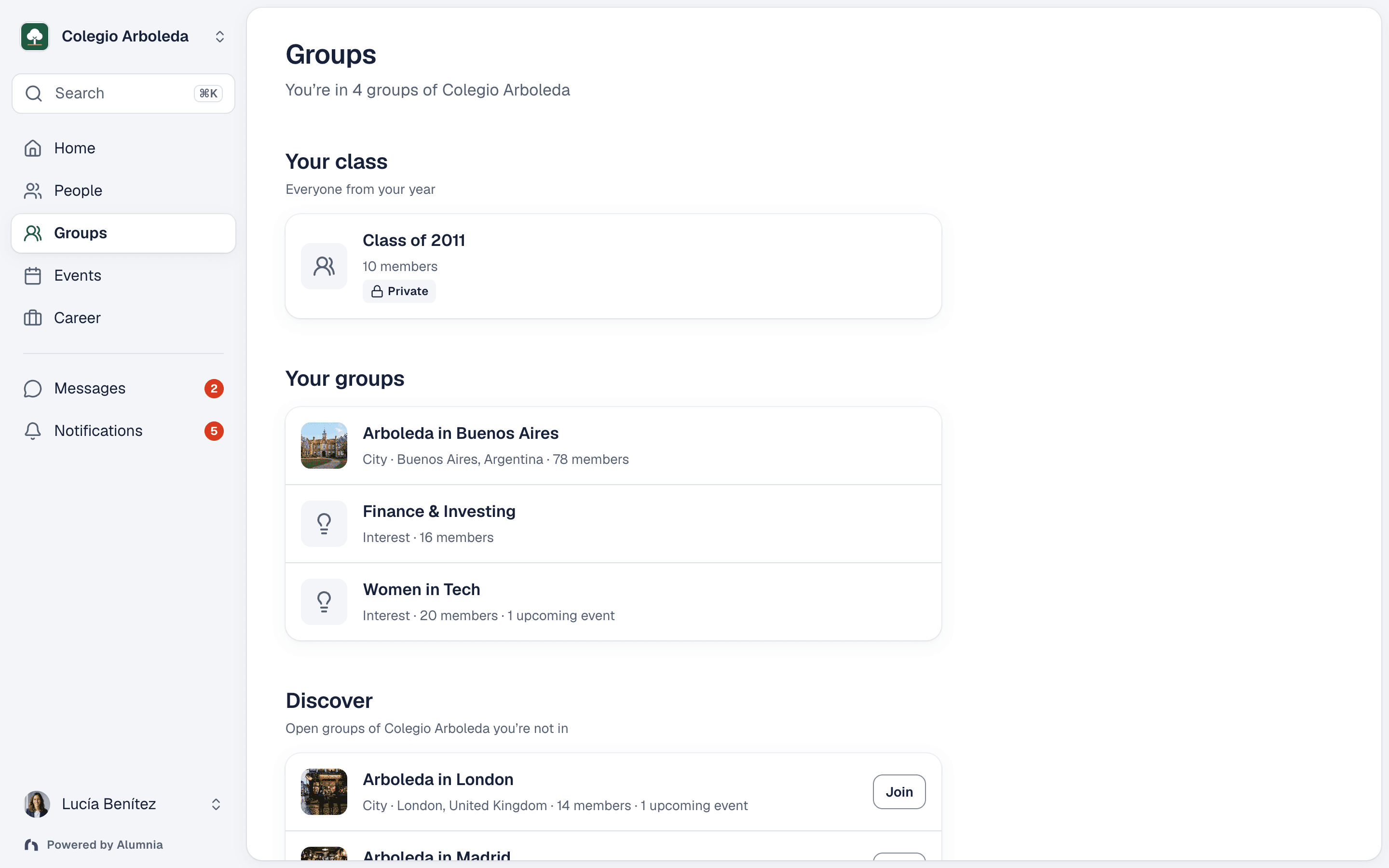
Keep local groups inside one global network
Organize groups around a campus, a class year, a city or a shared interest. Give each a leader and a reason to participate, such as a local reunion or a conversation across graduating classes. Groups can have their own members and events within the institution’s network. They organize the community; they do not create separate organizations or guarantee that a local group will stay active.
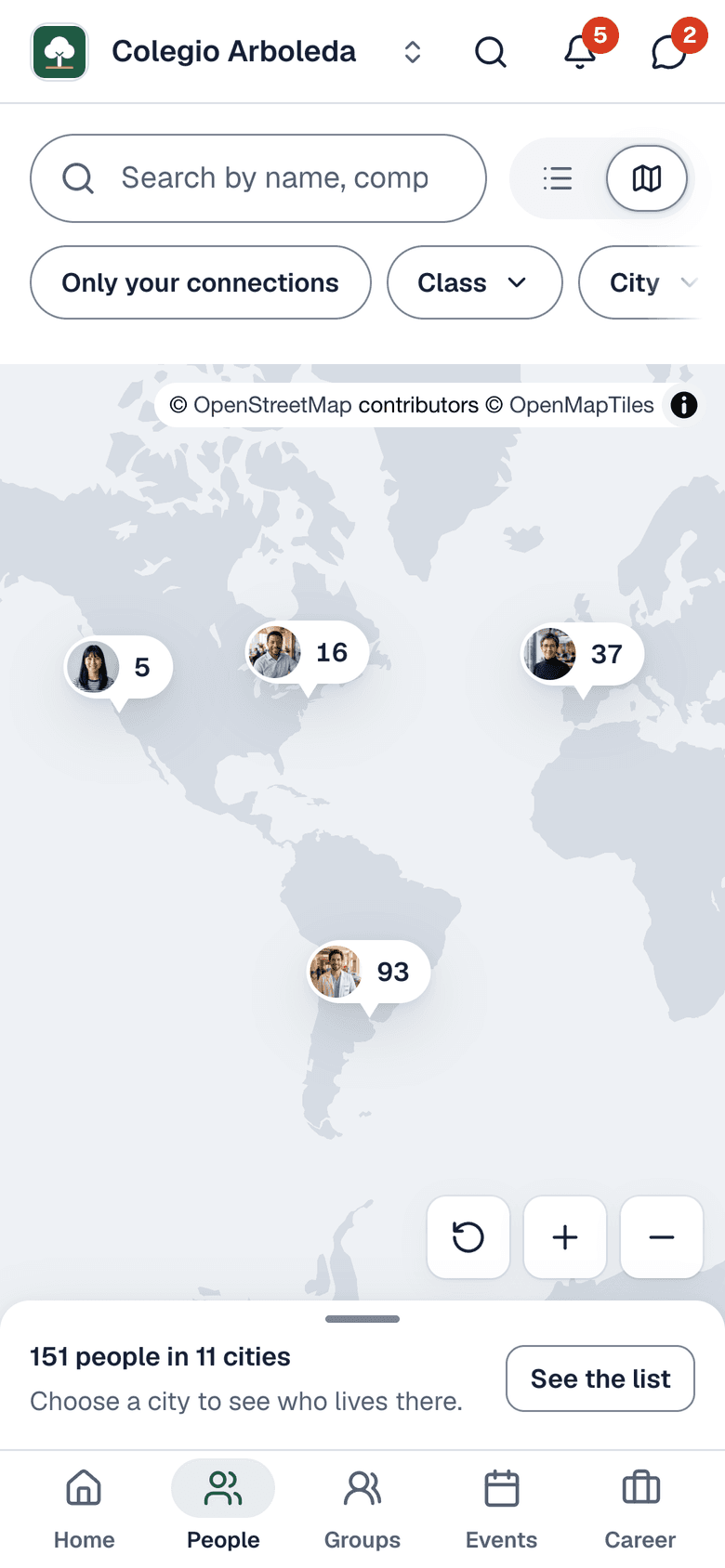
Use three interface languages and the shared apps
The interface is available in English, Spanish and French. This does not automatically translate member posts, profiles or conversations; your team can choose a shared language for a group and explain it when inviting members. Alumni can use the web or the shared Alumnia apps for iOS and Android, then access their institution’s community through its membership process. The apps carry the Alumnia name in the stores.
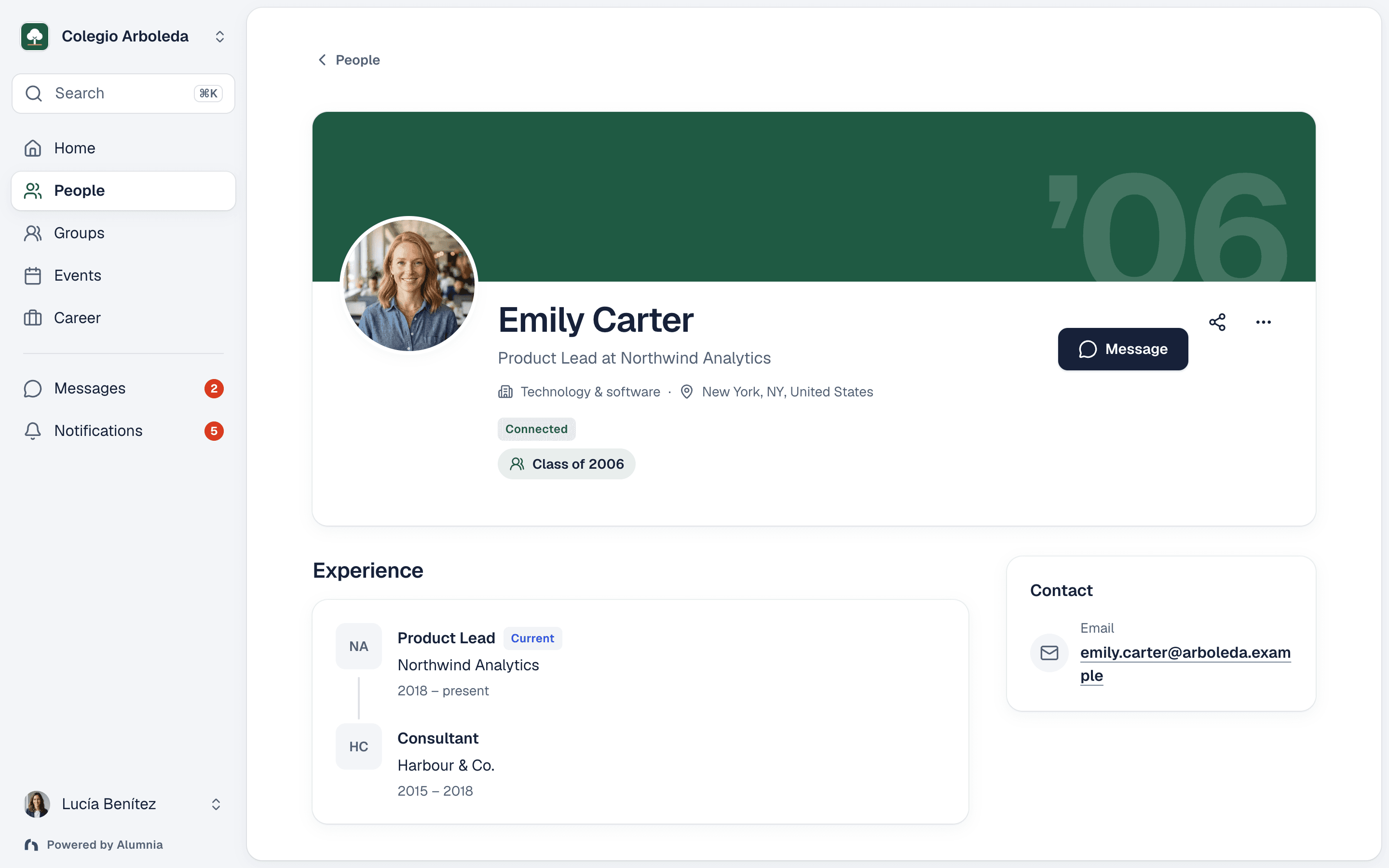
Offer alumni-to-alumni help across time zones
Invite graduates to ask a specific question about a career path or industry. Eligible mentoring requests can reach relevant alumni in the same institution automatically, depending on network settings; each recipient decides whether to help. Messages do not require everyone to be online together. For a live event, choose its time zone: the event view shows venue time and a viewer-time line when the zones differ. Introductions do not guarantee replies or career outcomes.
A staff playbook for the first dispersed cohort
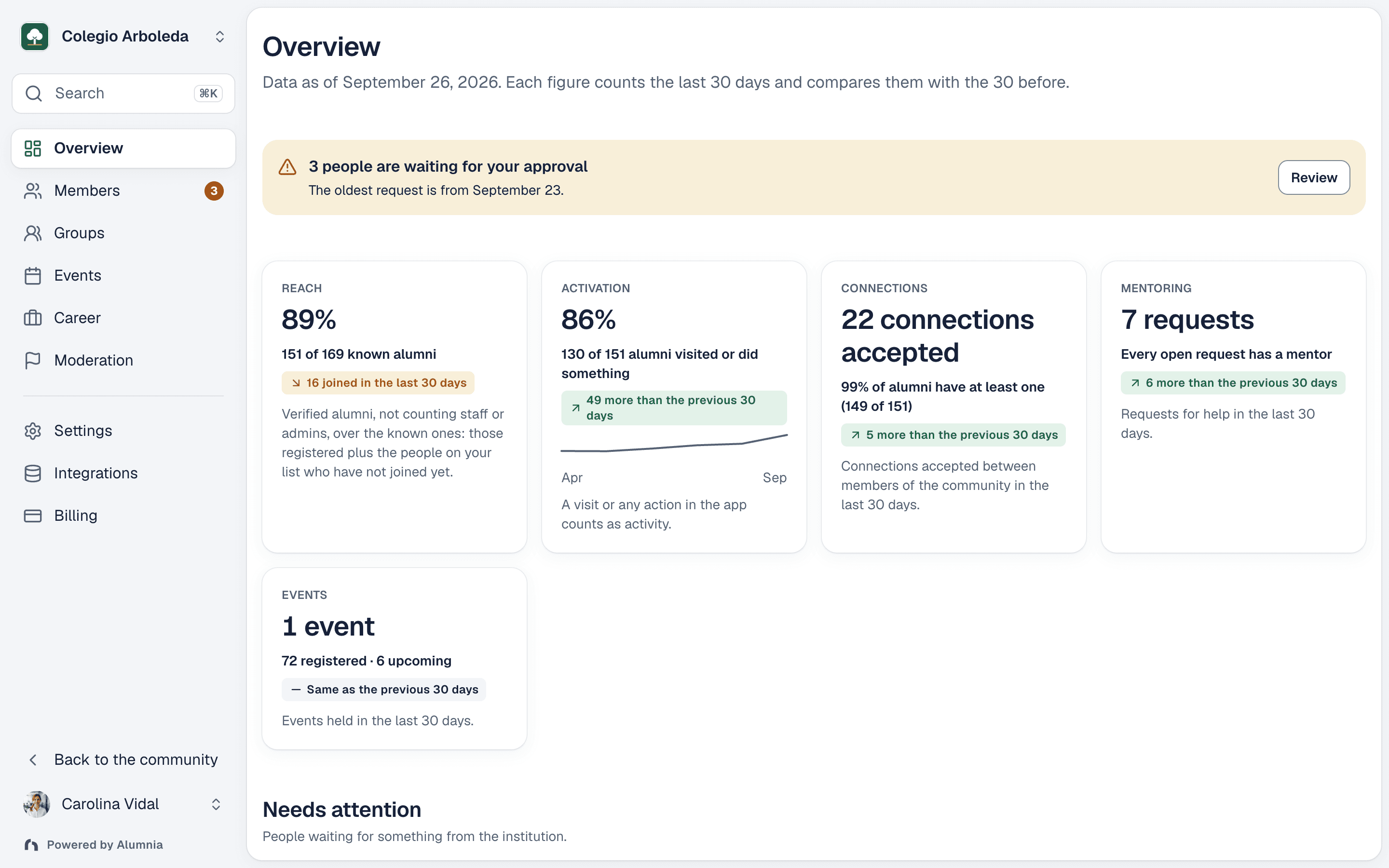
Choose a network owner and a small alumni group willing to participate. Use a contact list the institution is authorized to use, invite graduates and verify memberships. Ask members to confirm their profile information and city; nominate group leaders and offer one useful activity. Your team still needs to moderate, handle membership questions and encourage participation. Review the first cohort before expanding. The report screenshot is illustrative demo data, not measured participation or a promised result.
Frequently asked questions
How can graduates find peers after moving to another country?
Members can use the directory and city-level map to explore alumni from their institution by location, cohort and professional context. Results depend on member-provided information and visibility choices. The map is not live GPS tracking, and an introduction does not guarantee a reply.
Can different campuses and class years share one network?
Yes. Groups can organize campuses, cohorts, cities or interests inside one institution’s alumni network, with their own members, leaders and events. A group does not create an independent institution or replace its membership and moderation process.
Which languages are supported, and are posts translated?
The interface supports English, Spanish and French. It does not automatically translate member posts, profiles or messages. Set expectations for the language of each group or event so graduates know how to participate.
Do members need an app made separately for their institution?
No. Members can use the web or the shared Alumnia apps for iOS and Android, then find their institution’s community inside. Access still depends on the institution’s invitation and verification process. Read the official app links before inviting your first group.
How do mentoring and events work across time zones?
Eligible mentoring requests can reach relevant alumni in the same institution depending on eligibility and network settings; each recipient decides whether to help. Messages can be answered asynchronously. Event views show the venue time and, when the viewer’s zone differs, a local-time line. Your team still chooses an appropriate meeting time and explains the event format.
What does the institution’s team need to do?
Assign a network owner, use an authorized contact list, invite alumni, verify memberships, choose group leaders and a first useful activity. Continue to moderate, answer membership questions and encourage participation. Imported contacts or pending invitations are not joined, verified members, and profile information needs member confirmation.
What should we check before inviting alumni across borders?
Review the privacy policy and your institution’s authority to use its contact list. Decide who may join and what information members should share. City-level discovery is not live location tracking. Ask for the current hosting and data-processing details needed for your region; do not assume a particular data residency or a legal compliance guarantee.
How is a globally dispersed network priced?
Free supports up to 100 verified members. Standard paid plans use a flat monthly price in USD by verified-member capacity; staff and administrators count too. Imported contacts and pending invitations are distinct from verified members. Review the published limits, billing rules and Enterprise terms on the pricing page before expanding.
Start with one cohort, wherever graduates live
Define a useful first activity and a team owner. Free supports up to 100 verified members; review the plan limits before growing the network.
Create your first alumni cohort