For universities and graduate programs
A useful alumni network for your university, one program at a time
A university, business school or master’s program can bring dispersed graduates into one institutional network. Begin with a defined cohort, a responsible alumni team and a practical reason to return: find a graduate nearby, ask for career advice or discover an opening.
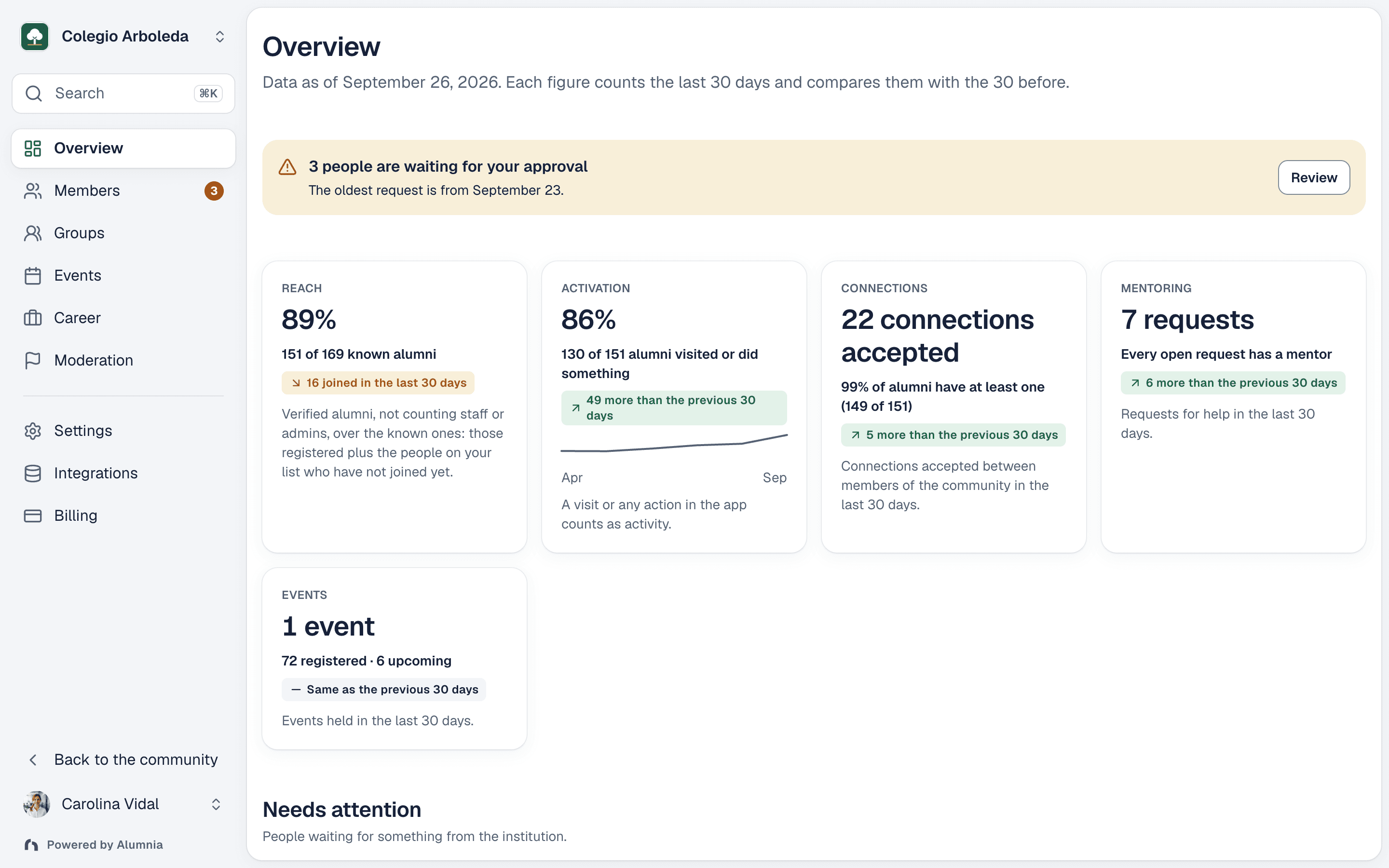
1. Bring a program’s roster into the community
An authorized administrator imports a CSV with mapped fields. Email is required; names, class year, degree, field of study and professional details can help your team recognize the cohort. Keep institutional contacts distinct from joined members: importing a record does not mean a graduate has accepted an invitation or is verified. Members edit their profiles and review suggested LinkedIn updates where enabled; freshness is not automatic. The images on this page illustrate a fictional demo institution, not a university customer or a measured result.
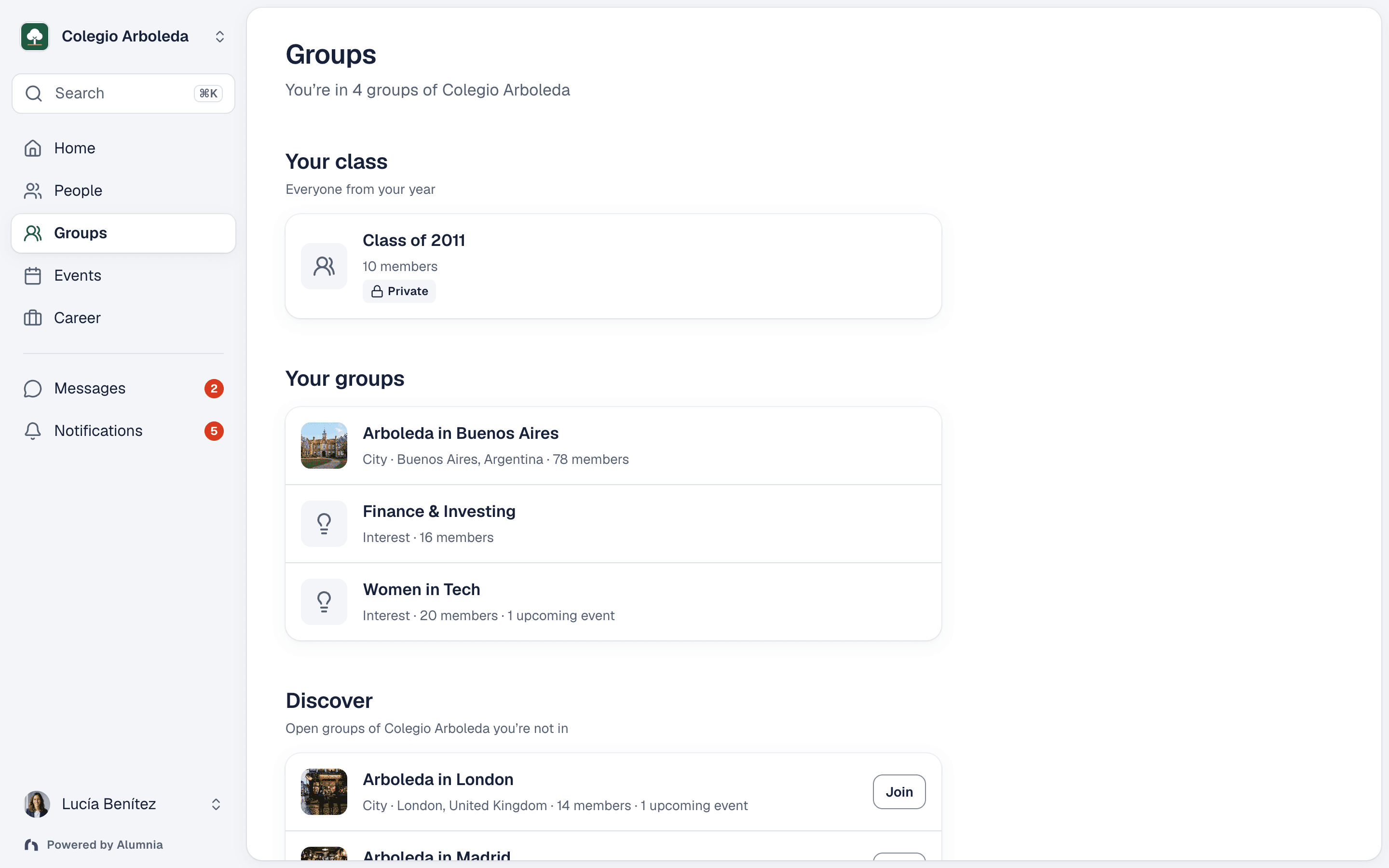
2. Connect faculty, degree and city groups within one institution
Institution administrators create groups by faculty or degree, city or interest and appoint leaders. Class-year groups can also be configured. Open groups are discoverable within the community; private groups are invitation-only. Leaders can post, invite existing community members and propose events for institutional review. These groups belong to the same institutional network: a program group is not a separate campus network or an isolated directory with independent administration.
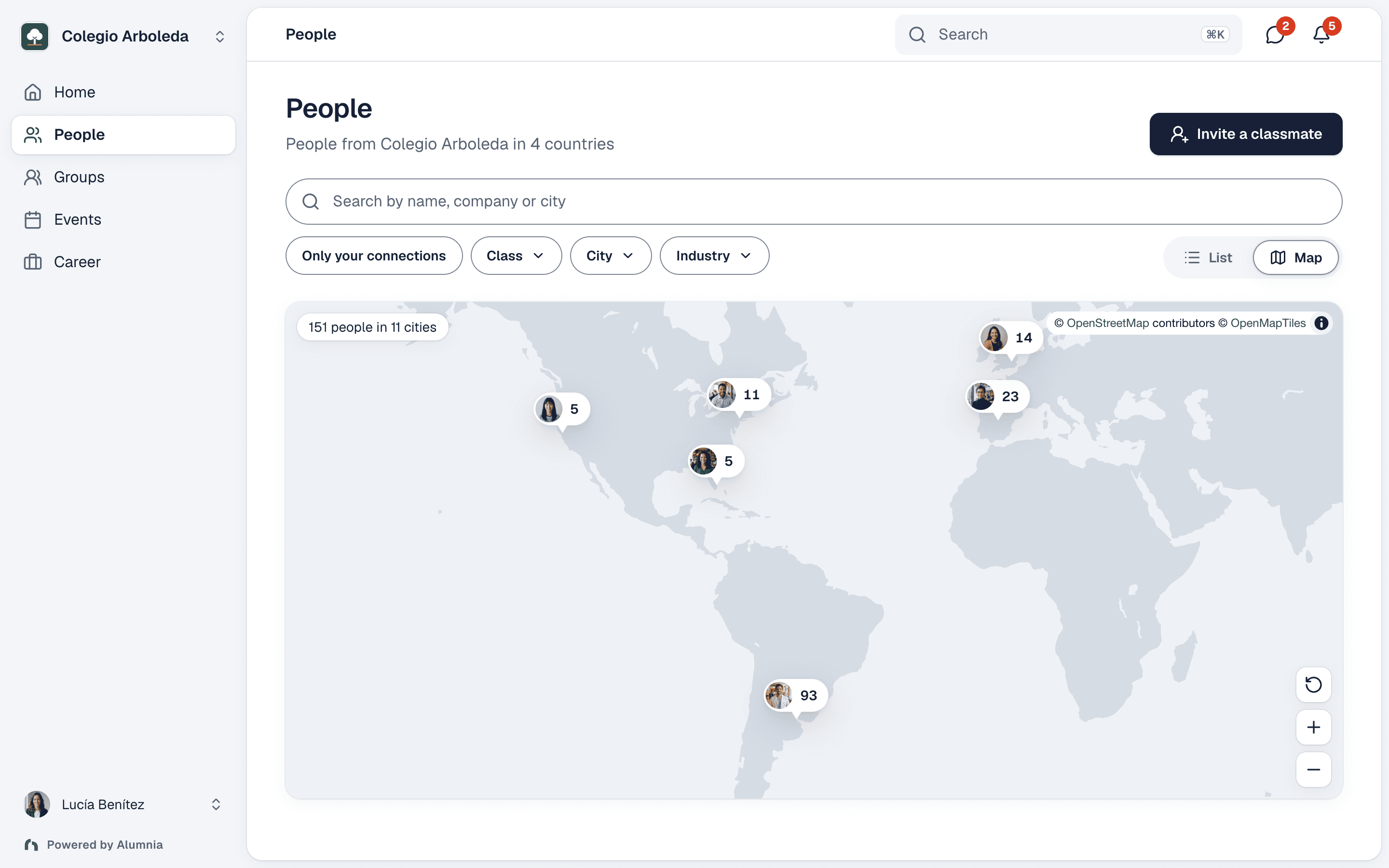
3. Help dispersed graduates find people and opportunities
The directory uses available profile information, and the map shows approximate city locations rather than live movement or exact addresses. Verified alumni can ask for specific career advice; Alumnia reaches out automatically for eligible requests when mentoring is enabled, and helpers decide whether to accept. Requests may need review or find no suitable person. The jobs board can show alumni who work or worked at the company, giving a graduate someone to contact before using the application link. A connection is not a guaranteed referral or hire. This is alumni-to-alumni support, including recent graduates.
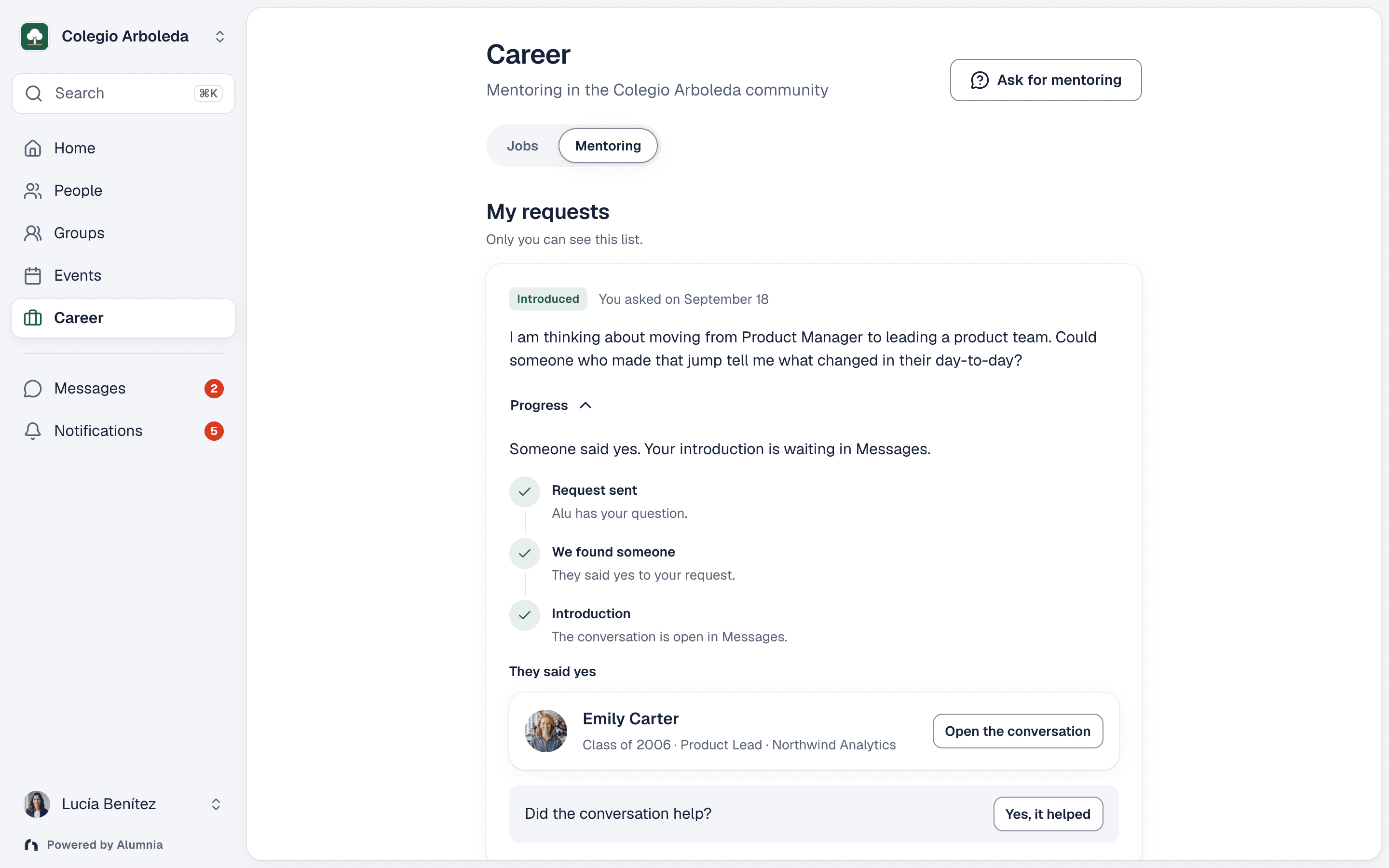
4. Keep the program accountable as you expand
Name a program owner, a roster owner and group leaders before inviting the first cohort. Review participation and requests, check open roles and agree who handles approvals. Keep your institutional CRM for its existing responsibilities and exchange supported records through CSV; this does not promise a native connection to every CRM. Add another program when your team is ready. For larger communities, discuss member capacity, data mapping and institutional permissions with us before committing to a rollout.
University and graduate-program questions
Can a business school or master’s program start with one cohort?
Yes. An authorized institutional team can start a network for its graduate community or use a program group within an existing institutional network. Choose the institution and program scope first. A group shares the institutional network; it does not create an independently administered campus network or separate directory.
Who controls program groups and their events?
Institution administrators create groups and appoint their leaders. Leaders manage content and invite people who have already joined the community. Open groups can be found within the community; private groups are invitation-only. Leaders propose events for institutional review. They do not gain institution-wide administrator permissions simply by leading a group.
What can we import from our existing alumni roster?
Map a CSV to supported fields: email is required, with optional names, class year, education, current company and other supported profile fields or configured custom fields. Review the data and invitations separately. An imported contact is not a joined, verified member, and a CSV does not automatically grant institution-administrator permissions or create program groups.
Is mentoring for current students, and does the jobs board recruit for us?
The workflow here is advice between alumni, including recent graduates. Eligible mentoring requests can trigger automatic outreach, with review and no-match limits; helpers choose whether to help. Jobs connect graduates to shared openings and available company experience. Applications use the contact in the listing. Alumnia does not promise referrals, hiring, enrollment or fundraising outcomes.
Does Alumnia replace our institutional CRM?
Your team can keep its institutional CRM and use Alumnia for the alumni community. Administrators can import and export supported lists through CSV. Confirm the fields and permissions you need before rollout; do not assume a native synchronization with every CRM or a complete fundraising or admissions system.
What does a university plan cost, and what about a larger rollout?
The Free plan includes the core platform up to 100 verified members. Paid plans have published flat monthly prices by verified-member capacity. Staff and administrators count even without recent activity; imported contacts and pending invitations do not. Feature availability depends on institution settings. For larger communities, contact us about a custom plan and your capacity, import and permission requirements; a custom plan is not proof of a tested university-wide scale.
Choose a program, a cohort and a reason to return
Start free with up to 100 verified members. Define your roster and group responsibilities before extending the network.
Start your alumni network free